An hour of companionable music and dialogue with Julian Caldecott on Peace with Nature in California and beyond – where it comes from, what it means, and how we get there from here. The interview is hosted by Alanna Jane Goldsmith on Radio 2050, the inspiring and forward-looking channel of internet-based Radio Paradise. Relax, enjoy, and think Peace with Nature!

Independent Evaluation of Swiss Engagement in Climate Change Adaptation and Mitigation
Led by Julian, this is an evaluation focused on design, performance and transformative potential in the 2015-2021 climate response portfolio of the Swiss Agency for Development and Cooperation (SDC), and the path ahead. It was published by SDC here, and the evidence annex – full of interesting case study material – was published by SDC here.
Evaluation of Danish Funding for Climate Change Mitigation in Developing Countries
Led by Julian, this is a forward-looking evaluation of Danish efforts since 2013 to mitigate climate change by reducing net GHG emissions in developing countries, focused on Ethiopia, Indonesia, South Africa, Vietnam, eight partner institutions and indigenous peoples in the Arctic and tropical forest areas. The evaluation was published along with the MFA management response here.
New paper on biosphere tipping points and climate investment
My new paper ‘Implications of Earth system tipping pathways for climate change mitigation investment’ has now been published in the peer-reviewed journal Discover Sustainability. It can be freely downloaded here. In it, I explore some implications of an anticipated biosphere-wide tipping point (BTP) in the year 2050 ± 10, including:
- that all climate change mitigation investments should be designed, chosen and judged against this hard and dated deadline, thus urgently prioritising early delivery of net GHG savings;
- that deadline-compliant investments should aim transparently for optimum cost-effectiveness in their biophysical outcomes, especially net GHG emission savings but also biodiversity, ecosystem service and climate change adaptation co-benefits; and
- that investors and markets should prefer actions that yield highly cost-effective biophysical returns, especially where valuable co-benefits are expected.
I explain how to do the necessary calculations, and I provide examples from recent mitigation aid portfolios to support a change of focus from financial to biophysical returns on investment. From these cases, key ways to prevent the BTP include protecting and restoring high carbon-density natural ecosystems, and improving choice awareness and building capacity to promote decarbonisation in all economic sectors.
Three urgent research priorities remain: (1) on the consequences of an Arctic Ocean imminently free of summer sea ice, and options for remedial action including the recapture of methane at large scale and high speed; (2) on testing a new dated mitigation value metric in justifying precautionary mitigation investments in multiple sectors and contexts; and (3) on integrating diverse co-benefit values (biodiversity, ecosystem services, adaptation, etc.) into mitigation investment decision making.
Swiss climate aid evaluation published
The Independent Evaluation of SDC’s Engagement in Climate Change Adaptation and Mitigation, 2015-2020 has just been published by the Swiss Agency for Development and Cooperation (SDC). It was led by Julian Caldecott, with Warren Olding as senior expert and inputs by Tino Smaïl, Mariam Hamad, Daniel DiMarzo and Julia Schwarz of Particip GmbH, as well as by national consultants Dominica Chingarande (Zimbabwe), Lidija Fajdiga (North Macedonia and Kosovo), Pankaj Kumar (India), Marina Marill (Perú) and Mario Zenteno (Bolivia). The evaluation ranged across SDC’s whole climate portfolio, and took a system-level view on major patterns, lessons and opportunities. It was based on: (i) a Portfolio Study to describe key patterns in SDC climate change expenditure; (ii) a Design and Performance Study to assess design quality, performance (effectiveness, impact and sustainability) and transformative potential among a sample of 31 climate change projects; and (iii) a Capacity and Partnership Study to examine the strengths and weaknesses of SDC’s key delivery mechanisms.
Considering the rapid pace of global environmental change, the SDC Senior Management Team noted that: “The evaluation is an important piece of evidence that SDC has developed a portfolio of projects that benefit both people and the planet. The evaluators highlighted in particular the suitability of initiatives building on locally adapted and owned solutions for sustainable development challenges (what the evaluators refer to as ‘nature and community based solutions’ approach). This approach is not only considered to be highly effective, but also has a significant transformative potential. The SDC’s senior management is committed to build on this strength and continue the investment in projects that apply a nature- and community-based solution approach, alongside the continuation of selected regional and global endeavours. The significance of potential of co-benefits is considered as an important insight that proves that investment decisions between poverty reduction and climate change adaptation/mitigation should not be seen as a zero-sum game.”
Alien invasive species in Scotland
Everywhere on Earth has its own wild species, which evolved in that place and are adapted to local conditions and to each other. They live in natural ecosystems in which every living thing has a certain role. But by accident or on purpose, people have moved many plant and animal species from wherever they naturally occurred to new locations.
Some of them take so well to their new homes that they are able to multiply and spread there, with dire effects. Perhaps they can grow faster or earlier in the year than local species, or steal their space and nutrients, or interbreed with them, or eat, strangle, poison or infect them. Introduced species that have impacts of this sort are known as ‘alien invasive species’ or ‘invasive non-native species’, or just ‘invasives’.
But whatever you call them, invasives are a menace. They threaten the health and integrity of nature reserves, botanic gardens, farms, forests and other ecosystems that we are trying to protect and manage. The result is that invasives are among the five most important threats to biodiversity world wide. The others are the conversion of natural ecosystems into plantations or suburbs, the over-exploitation of wild organisms by fishing, logging and hunting, the direct and indirect effects of climate change, and the alteration and pollution of natural habitats.
All five of these processes interact with one another. Over-exploited, damaged and polluted ecosystems can become so weak that they offer new opportunities to invasives, including weeds, pests and diseases. Also, climate change is shifting seasons and making conditions warmer, wetter or drier than they should be at different latitudes and altitudes. Invasives are able to exploit all such opportunities.
Scotland is a country where natural ecosystems have been massively disturbed by forest clearance, farming, muirburn, wetland drainage, grazing – you name it – for centuries. It also shares a long border with England, so Scotland is vulnerable to alien invasives that travel by road, foot or wind, and those helped by the northward spread of a new climate.
The Scottish government, now with added Green ministers – including Lorna Slater, the minister for biodiversity – recognises at least some of the invasive threat and has been funding anti-alien efforts, often in collaboration with charities such as the Scottish Wildlife Trust. On invasive mammals, they have been supporting efforts to slow the advance of pox-bearing American grey squirrels (Sciurus carolinensis) into the remaining heartlands of the native red (S. vulgaris), and have targeted the predatory American mink (Neogale vison) along several rivers.
For the plants, Scottish government (and charity) efforts have focused on a few prominent invasives: Himalayan balsam (Impatiens glanulifera), giant hogweed (Heracleum mantegazzianum), Japanese knotweed (Fallopia japonica), American skunk cabbage (Lysichiton americanus), and the pervasive Rhododendron ponticum, with its purple flower-patches now in forests across western Scotland. All these will be familiar as dangers to horticulturalists from the RHS, Woodland Trust and many other web-sites.
Meanwhile, in the north of the country, the Scottish Invasive Species Initiative is trying to keep track of alien invasions, sharing data with UK-wide efforts and contributing to Scottish and national strategies for biodiversity management. But the scale of the problem is actually much bigger that all this activity suggests. A case in point is the few-flowered leek (Allium paradoxum). These photos show them running rampant in April in Rosslyn Glen.


When I moved to Edinburgh at the start of 2020 I began to explore the city and its surrounding Lothian districts. I soon noticed that in nature reserves, woodlands and parks everywhere there were large areas of one single species instead of the normal diversity of native woodland plants. They were dreary, smelled vaguely of onions or chives, and were growing densely across the woodland floor, on river banks and islands, even up cliffs. The bluebells, primulas, snowdrops and wild garlics had simply been replaced.
I learned from the local flora that this plant was the few-flowered leek, that it had arrived from the Caucasus in the 19th century and had become quite widespread around Edinburgh by 2002. But it had clearly found its feet since then, perhaps helped by climate change as it seems to produce its few and ugly flowers earlier than its native victims. And it seems to spread easily by means of sticky bulbils that get picked up by passing people and animals.
I found that nature reserve managers and botanic gardeners were well aware of the threat, but that none of these specialists had enough resources to resist its spread. The ecology of the species had never been properly studied, so no one knew what its weaknesses might be. Control efforts, where they existed (such as in Dr Neil’s Garden at Duddingston), involved volunteers up-rooting plants by hand, but their effectiveness was unknown. Meanwhile the native woodland plants of Edinburgh and the Lothians are vanishing, and the public are unaware of the fact.
Alien invasives in Scotland deserve a much better-resourced strategy, informed by ecological and horticultural science and driven by public awareness and participation. It is clear that the few-flowered leek is a tricky opponent, robust, subtle and aggressive. Careful study will be needed to find out how best to defeat it.
It is also clear that this invasive alone can utterly transform the experience of strolling through a woodland in the spring, to the great loss of amenity, interest and beauty. Its impacts on the birds and insects that make these woodland ecosystems work are still simply unknown.
The decline of biodiversity in Scotland and everywhere else is going on largely in secret because few people are paying attention. Most wild species are unknown to science, and millions of them around the world are sliding quietly into extinction. Many will never even have the dignity of a name before they die. The progress of the few-flowered leek in Scotland stands for a whole process of global ecological decline, part of the climate extinction emergency that faces us all.
In Scotland there are at least a willing government and a huge number of people concerned about the environment. If the wonders of nature are to survive they must be educated and mobilised to pay attention and support action, even on the little things that are going on beneath our feet.
The educational potential of the horticultural community has a vital role to play in all this. Horticulturalists are on the front line, and should be taking every opportunity to raise awareness among public and politicians. They should also be supporting researchers and community groups against the threats to nature that are fast emerging. This is an emergency, and we should all act accordingly.
This article by Julian Caldecott was first published in Horticulture Week, 4 May 2022.

Buying time to avoid Earth system breakdown
In this talk at the Edinburgh Climate Change Institute, Julian Caldecott warns of tipping points driven by global heating in the Arctic and other complex Earth systems. These systems have been under stress for decades, due to the heat-trapping effects of excess greenhouse gases. Using the case of the Arctic sea ice ‘death spiral’ since 1979, Julian explains how complex systems under this kind of stress tend to resist change before suddenly tipping into new forms. He then uses his knowledge of government climate aid programmes to show how being aware of mid-century deadlines can help us make better choices in mitigating climate change. Having a dated reference point would make it easier to calculate the true mitigation value of investments, thus helping to buy us time to build a safer and fairer world, one with peace with nature at its heart. But peace with nature needs ecosystem thinking, and this must quickly become normal if system change is to occur. Julian asks challenging questions about ‘business as usual’ climate aid, and offers new solutions in this most vital area of public policy.
Watch the video, or read more …
Some of the thinking in the talk is new and unorthodox. It treats Earth systems as complex and assumes that, like other complex systems, they can tip suddenly from one state to another after they have been under stress for a long time. Julian argues that just such a stress is the trapping of heat in the biosphere by greenhouse gases at a concentration in the air above 300 ppm CO2, which has been the case since about 1950. Its direct consequences include rising heat content of the world ocean and increasing global mean surface temperature (GMST). Its indirect consequences include declining polar sea ice volume, melting glaciers, marine and terrestrial heatwaves, weakening ocean currents and changing weather patterns that are often experienced as environmental chaos and usually described as climate change (CC).
The current 1.5 C goal, based on GMST, helps to focus public attention and mobilise action by governments. But it does not reflect the non-linear responses to be expected of a system as complex as the biosphere. The continuity of cause and effect over time, and the prospect of tipping points, challenge the realism of CC mitigation planning and investment assumptions. Improvements can be made by using an estimate of when Earth systems will, with current timing and heating trends, become irreversibly committed to transformational (‘tipping point’) change. This will pre-date the tipping point itself, so estimating when allows us to judge the effectiveness of CC mitigation investments in postponing it. Postponing tipping points is how we can buy ourselves time to make the changes needed for longer-term safety.
But such postponements may well become harder to do over time, as each system becomes steadily more inclined to transform itself. A relevant case is the ice-free Arctic Ocean, anticipated for September 2035 ± 5, which may already be unstoppable and could well drive a dangerous methane surge when it occurs. The mitigation value of delivering avoided net emissions would presumably decline in real terms as the commitment point is approached, either suddenly on its eve or more gradually in the preceding years. Uncertainties abound and call for precautionary thinking about the dates involved and the mitigation value of investments, including the unit value of mitigation returns on those investments. For these purposes, it is more realistic to reduce that value exponentially from now to the commitment point, rather than to assume a change from ‘valuable’ to ‘valueless’ the day before it.
Thus, a dated ‘deadline’ in mid century (2050 ± 10) might be chosen to represent the transformation commitment point of key Earth systems. This is based on the trajectory of change in sea ice minima in the Arctic Ocean, and on the rate and direction of change in other cryosphere (ice-world) and oceanic systems, and in major equatorial forest areas. Whatever the deadline chosen, precautionary investment plans would exponentially reduce the value of each expected mitigation unit as the deadline approaches. Such plans would therefore express all expected emission reductions not in tCO2e but in tCO2edmv, where ‘dmv’ stands for dated mitigation value. This would have the effect of valuing early net emission gains more highly than later ones. This is already in principle a common aim, but a standard metric would allow direct comparison of true cost-effectiveness between alternative investments in practice.
Julian tested the usefulness of this approach with data from projects funded by one EU member state in three developing countries, targeting: avoided deforestation; forest regrowth (also representing tree planting); wind farming(representing renewable energy, RE); and capacity building for economy-wide decarbonisation. Over 21 years with a constant 0.1 exponent used to depreciate mitigation value (such that 1 tCO2edmv in year 1 = 0.41 tCO2edmv in year 10 = 0.14 tCO2edmv in year 21), returns were estimated at 0.90 tCO2edmv/€ for capacity building, with least certainty; at 0.40 tCO2edmv/€ for avoided deforestation, with moderate certainty; at 0.05 tCO2edmv/€ for forest regeneration/planting, with moderate certainty; and at 0.01 tCO2edmv/€ for wind farming, with most certainty.
Among the cases with moderate to most certainty, the much higher mitigation returns from avoided deforestation than from RE and tree planting offer a key lesson to mitigation investors. Variation in the certainty of returns is an important factor in choosing the right mix of investments for each location, but so too are the varied co-benefits (biodiversity, adaptation, human rights, sustainable development, etc.) available from different investment strategies. And the biggest risk of all is that transformation commitment points in Earth systems cannot be postponed (or will not, due weak precaution and/or weak leadership).
This all suggests that a key starting point for justifying the expenditure of public mitigation funds lies the calculation of tCO2edmv/€. Once this is done, other factors such as expected co-benefits can be considered in detail. But the initial calculation would require an agreed deadline date (which could be moved by agreement later, if success is achieved), an agreed exponent for converting tCO2e into tCO2edmv, and attention to the comparative valuation of co-benefits for fine-tuning the justification of each investment.
© Julian Caldecott 2022
Surviving Climate Chaos by Strengthening Communities and Ecosystems
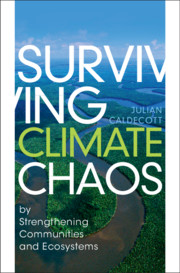
Surviving Climate Chaos is being published into a new world of lethal fires, floods and record-breaking temperatures, as well as frantic international negotiations before CoP 26 in Glasgow. This is while the IPCC warns us that we are in the last decade before Arctic, oceanic and equatorial tipping points take all choices out of human hands. This emergency calls for far greater focus and impact in our climate change response, and for the strengthening of communities and ecosystems everywhere against climate chaos.
Julian Caldecott’s new book, Surviving Climate Chaos by Strengthening Communities and Ecosystems, is published by Cambridge University Press. See my author page, and book blogs: fierce chaos and tipping points; death spirals and deadlines; the ambition to survive; chaos, strength and community, systems adapting to change, the power of cultural differences; the need for good leadership; leaving no one behind; why climate change is wicked hard; surviving climate chaos at CoP26; strengthening systems against climate chaos; Lost Species Day 30 November 2021; International Mountain day 11 December 2021; and surviving climate chaos and promoting peace with nature.
Abstract. “Surviving climate chaos requires communities and ecosystems strong enough to cope with the near-random local impacts of climate change. Their strength depends upon resilience, resistance and flexibility, three consequences of system integrity. Preserving and restoring the integrity of communities and ecosystems is needed everywhere, and quickly since active Arctic, equatorial and oceanic tipping points threaten total climate breakdown. This might be postponed by extreme efforts to conserve carbon-dense ecosystems, decarbonise economic systems, and recapture GHGs, but climate chaos everywhere is now inevitable. Adaptation efforts by 158 Paris Agreement Parties reported since 2015 are converging on community-based and ecosystem-based strategies. Case studies in Bolivia, Nepal and Tanzania confirm that these are correct strategies for surviving climate chaos, where success depends upon local empowerment through forums, ecosystem tenure security and environmental education. This approach, when replicated, networked and shielded by governments, offers the best way to strengthen societies against climate chaos while achieving the SDGs. Its usefulness is highlighted for national and local government officials and aid professionals with key roles in promoting adaptation, for students, researchers and teachers, and for all people who live under threat of climate chaos.”
Some highlights from the text:
- On culture. From cases such as Hawaii (1778-1898), Iceland (1000-1262), the Holy Roman Empire (800-1806), Ancient Rome, the EU and Brexit: “Consistent differences between cultural zones in the enthusiasm of their peoples for complying with externally-agreed standards of behaviour may be legacies of deep historical experience. This is all relevant to aid programming, since it implies that taking the time and making the effort to build and educate in the context of the local culture, and creating the space for local people to find their own answers at their own pace, may well yield more robust and durable solutions than programming against imposed deadlines can possibly achieve.” (pages 79-80).
- On leadership. “A particular risk arises where important environmental and social signals cannot be appreciated without a great deal of knowledge and attention to detail, so they are recognised only by a small minority. This applies often in large, complex or fragmented societies in which there are many distractions, and especially where slowly deteriorating environmental conditions are involved, or where there are slowly growing social threats such as inequality, corruption and polarisation. Here, if the danger is severe and solutions are needed urgently but there is little public appreciation of the need for action, an essential quality of leadership is a willingness to act decisively to safeguard the group but in advance of public opinion. An accountable leader must then explain what happened in the emergency and why, and be willing to accept responsibility for all the consequences. A good leader must at least be competent, attentive, intelligent, articulate and flexible, but all candidates for leadership are likely to claim all these attributes, so the choice will be up to the electorate. The latter might be expected to be on the look out for stupidity, cupidity, criminality, extremism, narcissism or a tendency to lie, since these often-concealed attributes can endanger everyone. With climate change, it would also make sense for voters to prefer leaders who understand ecology, at least to the extent that they can be trusted to grasp the basic ideas of where food, water and environmental security come from, and what climate change might mean for these necessities. Such knowledge can easily be tested at interview or by questioning during campaigns, but ecology is still seen as a minority interest rather than something that every citizen and journalist should know about. It is not feasible for leaders who are competent on climate change to be chosen consistently while this lack of interest in ecology persists. This is why the universal early teaching and learning of ecology is necessary to adaptation leadership, and therefore to adaptation itself.” (pages 81-82).
- On leaving no one behind. “The most reliable, cheap and equitable way to ensure than no one is left behind is for individual hardship to be detected by other people – neighbours rather than machines, companies or functionaries of the state, and acted on by them alerting public services and monitoring the response. This offers a way to implement reliably policies of equity that require neither states nor corporations for their primary effectiveness. The key issue then becomes how to ensure that nations and corporations support and enable the operations of small groups, rather than replacing them with larger-scale systems that conflict with the ordinary sociability of our species. This choice, of whether to work with organic society or replace it with a machine state, is fast becoming urgent as the technology needed for universal surveillance is developed by corporations and bought by governments.” (pages 83-84).
- On climate change mitigation. “Although what we should do in practice has long been obvious in general and precautionary terms, the existence of uncertainty inevitably fed controversy, and controversy has favoured the rich and powerful who often have least interest in promoting change. The whole thing has been described as a ‘wicked’ problem, being deeply complex, intractable, and resistant to solution, but an independent observer might say that we have added to this ‘wickedness’ through unclear intentions, political naïveté, and a specious faith on our own knowledge and ability to understand and predict the behaviour of extremely complex systems.” (pages 204-205). “The mitigation problem cannot be solved by any one country, and there is no all-knowing, global ‘hegemon with the power to impose a single set of rules’ (Chapter 1). Only nature could have that role, in wielding infinite power and universal rules, but this is seldom acknowledged. International cooperation is therefore essential, and this has fallen foul of multiple sources of reluctance to cooperate, rooted in historical, cultural and economic experiences, rivalries and reasons for distrust, ranging from slavery, trade and religion to imperialism, ideology and war. … The slow and painful process of the UNFCCC and its gradual, erratic progress towards approximate agreements on fixing the mitigation problem, is the compromise solution that has gradually been squeezed out of the tension in the UN system between everyone knowing that something must be done and no one being willing to pay for it.” (page 309).
- On strengthening systems. “By assigning to local people clear, long-term rights to own, manage and benefit from ecosystems, they will become more interested in the condition of those ecosystems. By also establishing ecosystem management groups or forums where people can agree how to manage the ecosystems for which they are responsible, the ecosystems will tend to be managed in line with agreed locally-perceived priorities. Because of long-term tenure, community responsibility and forum accountability, these priorities will usually include an interest in the long-term supply, and hence sustainability, of a selection of ecosystem goods and services, for collective rather than private benefit. The forum itself will also preserve, restore or introduce practices of debate and consensus building within the empowered community. Some of these effects (e.g. biodiversity conservation, catchment services, carbon storage, conflict reduction, poverty avoidance) will also be appreciated as benefits by national society, creating an incentive among national stakeholders to support and replicate the community empowerment process. Some national benefits may be seen by outsiders, because of their different priorities, as unlikely to be adequately addressed or developed by local people, creating an incentive to improve local ecological knowledge by offering technical support, environmental education and networking with other communities where similar issues have been resolved. The net result of secure local tenure, local forums, and outside support offered but not imposed (i.e. without consent or compensation), will be healthier ecosystems and more engaged and confident local people (i.e. stronger systems) at landscape level, and improvements to governance and environmental security at the national level, as a result of which the whole country will be better able to cope with climate chaos.” (page 285).
- On understanding the challenge. “Never before has an animal species single-handedly destabilised its own habitat at a global level, and in the process brought to a halt the evolutionary trajectories of millions of other species. We are doing this while also applying the full force of investigative and analytical technology to document and explain events and foresee outcomes, and also while in full possession of enough advanced ecological and anthropological knowledge to make sense of what we are seeing. The adaptation communications are an ever-deepening ocean of knowledge to which any student, researcher or teacher should be drawn at this, the most interesting and desperate time in human history.” (page 322).
- On the role of small groups. “A small group can be potent if it wants to be, and partnerships are vital. There is nothing to stop everyone on Earth becoming an active part of the climate response by joining with others to make a difference. We are social animals and can achieve nothing outside of social systems, including the saving of the ecological systems on which we all depend. And one of the ways that a small local group can make a real difference is by joining forces with others to enact change and to insist on it. The more groups there are, and the more they talk with each other, the more valuable they all become, to each other, to local and national governments, and to the future.” (page 323).
© Julian Caldecott, 2021

Peace with Nature in Scotland
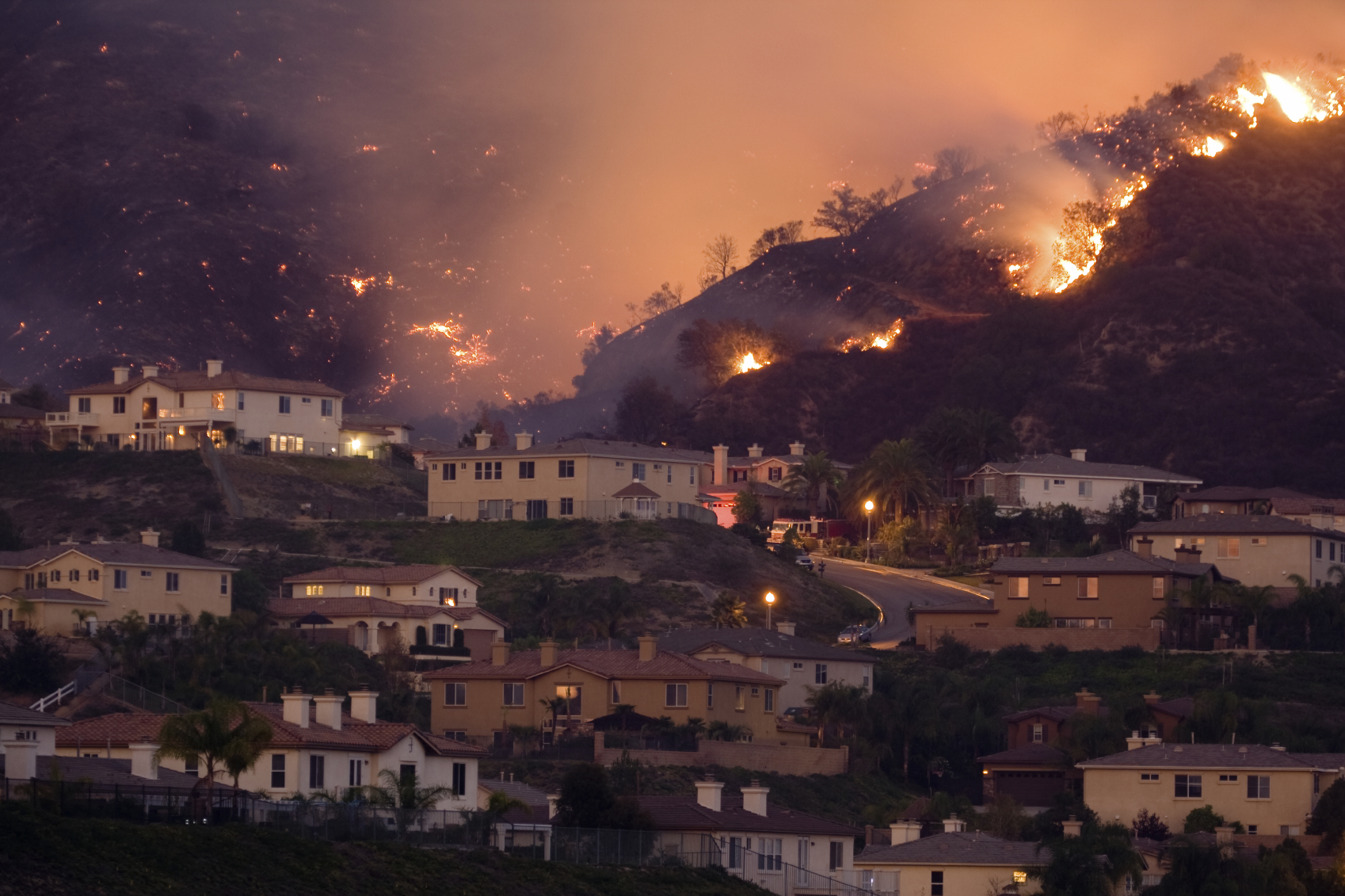
A petition calling for an Article on ‘Peace with Nature’ to be written into any new Scottish constitution. The Article would declare the end of ‘war’ against nature and seek cooperation with like-minded peoples and governments. In practical terms, it would also establish a Court of Ecology, the role of which would be to decide, on behalf of the country’s citizens, whether or not any law is safely compatible with ecological sustainability, and possessing the authority to strike it down if not. It would help to safeguard the people and biosphere against dangerous mistakes by politicians. A constitution that establishes the supremacy of ecological law over human law, and that offers a practical and cautious way to put it into effect, would also set a new, replicable and deeply hopeful standard for all other countries.
Natural ecosystems sustain water supplies, environmental security, pollination of crops, fisheries and soil fertility, and many other irreplaceable things. Yet these ecosystems are deteriorating fast, exposing people, farms and settlements to severe risks and costs. All the living systems that provide food, water and security for people and businesses are failing, as indicated by spreading deserts, droughts, wildfires, floods, storms, mudslides, epidemics, extinctions, famines, and political crises induced by them. Ecologists know these to be connected into one worldwide pattern, and also as manifestations of ecological tipping points, which threaten us all, along with our children and everything else that we love about the world.
They are all signs of humanity’s ‘war’ with nature, which must end with ‘peace’. But peace with a superior power such as nature, with which one cannot negotiate, in practice means ‘submission’. This would require us to stay carefully within the boundaries of peaceful behaviour if our existence is to continue. To explicitly align the principles of ecological sustainability and good governance at a constitutional level is necessary to take the pressure off nature definitively, and encourage and enable natural regrowth to occur. Citizens who think that a law may violate ecological sustainability should have the right to petition for it to be reviewed, debated by experts, and struck down if it is unsafe. This new and empowering approach is founded on the hope that steady progress towards ecological sustainability will be fast enough to save the biosphere and humanity.
Water: Life in Every Drop 2020 Edition
“As water crises multiply, and mass extinction and climate chaos escalate, we have the sense that nature is serving us a very clear warning and that something major has to change, or else. To respond requires that our adaptive skills are informed by ecology and applied effectively. The key issue is whether we can adjust our ways of life to make it in our new global environment. Building an informed awareness of water, and the life it bears in every drop, has to be a key starting point. Public involvement in the environmental struggle is now worldwide, transforming political agendas everywhere. Science, spirit and community are working together to release energy for change and justice at a scale seldom seen before. The channelling of this energy into ecological restoration and renewal of our relationships with nature and with each other is the great task of everyone alive today or soon to be born. It is time to make Peace with Nature.” (Water: Life in Every Drop, pbk ISBN 9781843199632, hbk ISBN 9781843199649.
2008: all known forms of life depend on water
Water covers 71 per cent of the Earth’s surface, making ours a blue and white planet, gleaming in space. The seemingly boundless ocean feeds water vapour into the atmosphere, from which it falls as rain – ultimately our only source of fresh water, the most precious substance on Earth. But with global warming, the seas are getting too hot, and the weather increasingly erratic as warm water feeds more energy and moisture into the air. Even in the past, some land areas were desperately dry and others flood-prone, but these tendencies are now deepening as well as shifting from place to place. On top of this we’ve been mismanaging the ecosystems that regulate the availability of fresh water, and polluting what we do have. As a result, well over a billion people lack access to a safe water supply, the amount of drinking water available is shrinking, and the growth in demand for fresh water is increasing relentlessly. We are approaching a global water emergency. But how did we get into this situation, and what can we do about it? In this book, Julian Caldecott reveals where the water we use comes from, and at what social and environmental cost. He explains the history, science, economics and politics behind the looming water crisis, what the future is likely to hold if we do too little, and what we can all do to make a difference.
2020: more of the same but worse, plus chaos
As large swathes of England are flooded and much of Australia burns, the 2020 edition of Water: Life in Every Drop introduces key ideas of water ecology and sustainable development. These ideas are essentially unchanged since 2008, and stories I tell and their implications for our relationship with water remain true. The need is now even stronger for ecological thinking to shape our laws and constitutions. I have weeded the book for anything that seems misleading on current reading, and in the process I updated it. Lake Baikal in Siberia is now more threatened by pollution, for example, and there are many more people living around Lake Naivasha in Kenya. These reflect general trajectories, as does the rising power of China, but for water, ecosystems and climate the position can be summarised as ‘more of the same but worse, plus chaos’.
Meanwhile, many forebodings have been fulfilled. The consequences of global heating are hard to anticipate in detail as they involve turbulent systems, but some predictions are spot on. Many thousands of wild species are sliding into extinction each year, the sea is rising, atmospheric and oceanic currents are wobbling, multi-year droughts are grinding down large parts of Australia, North America and southern Africa, heatwaves are killing people in Europe and India, and lethal wildfires are raging with unheard-of ferocity in unexpected places. Every new year is breaking records for mean global surface temperature, and savage storms are taking heat and water from warmer oceans and slamming into unprepared coastlines. And all this follows with precision the expected path of a biosphere newly-loaded with greenhouse gases released by the actions of humanity.
It was recognised in 2016 that human impacts mean that we are now living in a transition to a new geological era, the Anthropocene, which will be clearly visible in future sedimentary deposits that are rich in plastics and poor in fossil species. The Anthropocene succeeds the gentler Holocene, which followed the end of the Ice Ages 11,700 years ago. Our cities and farming systems depend on Holocene conditions, so there is now real concern that humanity will die out during this transition, along with most other life forms. We have the sense that nature is serving us a very clear warning and that something major has to change, or else. And we’re also running out of time. The melting of the Arctic Summer sea ice, which for decades has been absorbing surplus solar heat trapped on Earth by an enhanced greenhouse effect, is a particularly worrying trend that seems to be heading for zero in about 2030. After that, all bets are off.
Local water, local heroes, 2020
But we should remember that there are thousands of brilliant efforts by small groups all over the world — an aquifer or catchment restored here, a neighbourhood preparing against disaster there — multiplying everywhere but invisible to big government. These grass-roots actions must be validated and supported, networked and replicated, until they condense into a new Zeitgeist in which we all suddenly realise that of course we must pay attention to ecology, of course we must protect the web of life, and ask ourselves why else would we have minds, spirits and communities?
And meanwhile, we should also remember:
- that there are thousands of cities and hundreds of states and provinces that are getting on with ecologically-positive action regardless of what their national governments are doing;
- that some small countries are declaring ‘peace with nature’ and halting or reversing deforestation, extinction, and greenhouse gas emissions, with Costa Rica, Nepal, Bhutan, New Zealand, Iceland, East Timor and Portugal all springing to mind;
- that many corporations now see their assets as dangerously exposed to ecological risks, with their managers, shareholders and regulators struggling to forge new rules, often encouraged by potent divestment campaigns; and
- that since 2018 the Greta Thunberg and Extinction Rebellion movements have been putting enormous constructive, non-violent pressure on governments across the world, forcing a re-think of human priorities and laws in the face of impending ecological collapse.
The future, if we can but imagine it …
This is all great stuff, and because this re-thinking was starting when I wrote this book I began Chapter 10 with a visit to the year 2085: ‘The biosphere, having been saved…’ While it is easy to be discouraged if you look only at big governments and the big picture, hope is to be found hidden in the undergrowth where local actions, local heroes, and small countries are the green shoots that will one day replace the deadly old system. In the process, we’ll have to accept that the rules of ecology apply to everyone, always and everywhere, but that we have the intelligence, compassion, will and freedom needed to rebuild a world that is good for everyone — born and unborn, weak and strong, human and non-human.
Physics, astronomy, evolution, governance
There are other challenges for the imagination here. They include background themes, such as the astonishing physical chemistry of water itself (Chapter 1) and the presence of water on Earth and elsewhere in the solar system and beyond (Chapter 2). Also, the origins of the ‘tree of life’ (Chapter 2), and the influence of human adaptation to coastal environments, in which foraging in water helped to shape our minds and bodies (Chapter 3). And the EU’s Water Framework Directive (Chapter 9), which is now seen as part of a global drive towards green ‘experimentalist’ governance, where local heroes meet, teach and make friends with national and international institutions.
Ocean plastics and acidification, wildlife collapse, water shortage
Meanwhile, some topics in the book have been publicised and popularised to the point of common knowledge and general interest. They include the following.
- Plastic in the oceans (Chapter 4) is choking, entangling and poisoning sea life, and is an inevitable consequence of making non-biodegradable materials for everyday use by everyone in an exploding population on a small planet. To solve it we will have to phase out the use of such plastics through effective regulation and/or taxation, while also cleaning up the debris.
- Acidification of the oceans (Chapter 2) is eroding the web of aquatic life that sustains most of the biosphere and is an inevitable consequence of burning fossil fuels into carbon dioxide, which dissolves in water to make carbonic acid. The current rate looks set to make the oceans more acidic than they have been for 65 million years. To solve this, we will have to phase out the burning of fossil fuels through effective regulation and/or taxation, while also cleaning up the air by capturing the greenhouse gases that have already been released.
- Collapse of wildlife numbers and diversity (Chapters 2, 4 and 9), by more than half since the 1970s, is an inevitable consequence of feeding and enriching humans by replacing most natural ecosystems with artificial ones and then spraying poisons over everything. To solve it we will have to deploy environmental education, community ecosystem ownership and benefit sharing, payment for ecosystem services, ecological restoration, organic farming and other effective arrangements in millions of locations, while also protecting natural ecosystems and wildlife populations through effective regulation, and systematically closing down and cleaning up all sources of agricultural, industrial and urban pollution.
- Critical shortage of fresh water in urban areas (Chapters 6, 8 and 9) is an inevitable consequence of not paying attention to where water comes from, not managing catchments properly, and not charging users enough to pay for these things (while also, often, being an inevitable consequence of rising sea levels and drought induced by global heating). To solve it we will have to establish ecosystem protection, ecological service payments and restoration arrangements in upstream locations, while investing in public water systems that guarantee adequate water for all at affordable cost, solving the climate change problem if we can, and managing humanely the evacuation of unviable cities where we have to.
Learning to survive
Some of the changes that face us during the birth of the Anthropocene may well be manageable, but only if our adaptive skills can be informed by ecology and applied effectively. The key issue is whether we can adjust our ways of life to make it in our new global environment. Building an informed awareness of water, and the life it bears in every drop, has to be a key starting point.
© Julian Caldecott
Praise for Water: Life in Every Drop:
- ‘A brilliant overview of an enormous subject’ – Steven Poole, The Guardian.
- ‘Should be read far, wide and as soon as possible . . . it does an excellent job of promoting a rational, effective, trans-ideological approach to environmental decision making’ – Miguel Mendonça, Resurgence.
- ‘Caldecott keeps a masterly hand on the reins of what is a vast topic . . . With laudable dexterity, [he] moves from the very small to the very large, from the interactions of atomic particles to the role water plays in the biosphere’ – The Ecologist.
- ‘A prophetic read’ – Edward P. Echlin, ecological theologian and author of The Cosmic Circle.
- ‘Includes a lucid presentation of the Aquatic Ape Theory. The book shows that we can avoid disaster if we come to our senses and give Gaia a helping hand’ – Elaine Morgan, evolutionary anthropologist and author of The Descent of Woman and The Scars of Evolution.
- ‘What could be more important than water? This book looks at every aspect of water from its chemistry and mystery to its central role in the ecology of EVERY LIVING THING. And yet, it’s a riveting read, full of fascinating stories from an author who actually knows what he’s talking about. So many of these environmental books are written by journalists with no real grounding in the subject. But Julian Caldecott is an ecologist with decades of field experience which enrich this work. He’s been there, done it, seen it and best of all, has put into practice ways of solving local water crises of every hue. Give it to all your friends and relations – they’ll love you for providing a good read and you’ll glow with the pleasure of sharing knowledge on the big issue of the coming decade.’ – ‘Smartyhands’ on Amazon.
- ‘I’ve just finished reading Water by Julian Caldecott. There’s a long waiting list to read it after me, but it goes deeply into marine pollution, of course. One point he makes is that visitors (tourists) to the coast need to take care of the environment they’re visiting. Earlier in the book there’s a good summary of what a Biosphere is, which I sent to the members of our Grabouw Beautiful committee. Highly recommended!’ – Andy Selfe, Whale Coast Conservation (Cape Town).
- ‘Water by Julian Caldecott is a brilliant, beautifully written book which I found very informative and initially depressing, but it finished on a positive note with a clear message of hope.’ – Henrik Chart, Land, Sea & Islands Centre, Arisaig (Scotland).
From the 2007 review in The Guardian (22 December 2007, Mind Altering Reads) by Steven Poole: “Julian Caldecott’s running contrast [is] between ‘Taoist’ and ‘Confucian’ ways for humans to interact with the natural world. We could do with more of the former, he says, justifying the argument with a brilliant overview of an enormous subject: the function and behaviour of water on our planet, and the ways in which we use and abuse it. We learn about oceanic cycles, vulcanism and tsunamis; overfishing, the destruction of wetlands, the draining of lakes and incontinent pollution. There are beautiful, almost cinematic evocations: of strangely coloured deep-ocean fish, or the eruption of Krakatoa as ‘the loudest noise ever heard’ by humans. And the problems of waste storage are dealt with in terms of unarguable rationalism: “Everything eventually leaks”. Shortages of water and desertification will lead to more war (as they arguably have already done in Sudan); and Caldecott argues with persuasive urgency that a respectful approach to water-dependent ecosystems is merely a matter of self-defence. I look at my bottle of spring water, whose plastic took six times as much water to manufacture as the bottle contains, guiltily.”
From the 2008 review in The Ecologist (March 2008) by Mark Anslow: “Caldecott keeps a masterly hand on the reins of what is a vast topic, dividing it up well and using the concept and properties of water to explore ecological issues on an impressive scale. With laudable dexterity, Caldecott moves from the very small to the very large, from the interactions of atomic particles to the role water plays in the biosphere. He examines our interaction with water – oscillating as it does between worship and downright abuse. He dives into the depths of the oceans to remind us of the effect we are having on [these] ecosystems … He weighs up the value of much-maligned wetlands and evaluates our relationship with the world’s lakes – alternately water source, sewage dump and electricity generator. He also opens the reader’s eyes to the world’s vast reserves of ground water, which, one pillaged, may never be replenished. But despite the retinue of shiver-inducing statistics he keeps at his fingertips, Caldecott is at pains to be optimistic. He relates some remarkable success stories, including a clam-restoration project in the Philippines, which has had a phoenix-like effect on fish stocks, and a mangrove-planting project in Indonesia to undo the damage caused by prawn-farming. He ends with a call for us to be as conscious of the water in our products and lives as we are becoming of energy …”
From the 2008 review in Resurgence (May-June 2008) by Miguel Mendonça: “Water – Life in Every Drop should be read far, wide and as soon as possible. Why? Because we take the everyday for granted, no matter how important; because water is critical to all life, yet is fast becoming an endangered resource around the world; and because this book does an excellent job of promoting a rational, effective, trans-ideological approach to environmental decision making. Critically, Caldecott succinctly identifies what mistakes in decision-making have been made in our dealings with water bodies, and shows how we can rethink policymaking, as well as why we must. One of the most striking things about the book is its enchanting descriptive passages. The David Attenborough voiceover is almost there. It takes me back to watching Wildlife on One as a child, and being effortlessly drawn into alien, sub aquatic worlds, to explore the lives of creatures I might never know, but could gaze in wonder at from a suburban living room thousands of miles away. But, Caldecott is also brutally realistic. Nothing here to shield us from the harsh truths that lie just beyond the shimmering imagery. We are confronted by accounts of humanity savaging the environment, groups using every possible technological tool to increase their share of the harvest, governments getting it horribly wrong, corruption and ignorance creating desperate tragedies which are repeated again and again. The author seems to come from a place that I believe is of the utmost value in these times. The work itself is a valuable tool, which people can learn from. But it is delivered in a way that transcends ideology, that avoids getting caught up in dealing with the political spectrum. What it concentrates on is asking lean and practical questions: what can we learn from this? How should we do things differently? By what criteria can we judge the correctness of a policy or practice? How do we work with local communities and stakeholders to maintain the healthy function of water–bodies? We have seen what doesn’t work, as Caldecott outlines; now, as he further shows in his vision of the future at the book’s climax, let us decide to remake our minds, and rationally and fairly remake our world, in order to serve the interests of all life.”
From the 2008 review in the Ark (Summer 2008) by Edward P. Echlin: “Caldecott argues convincingly, by writing lucidly about people, earth and water, that something radical must change in the next few decades, either voluntarily through a mass increase in the organic, water-revering green movement … and relocalisation, or by catastrophe, already beginning with floods and droughts and extinction, as gaia, under God, strikes back. I recommend this well written and presented book to everyone interested in earth, its water, life and animals, and in responding as Christians to earth’s water crisis.”